
Movement truly is therapeutic, and stretching is one of the most powerful—and most overlooked—parts of your daily wellness routine. In addition to enhancing flexibility, stretching can improve circulation, aid in strength building, enhance range of motion, and help reduce chronic pain [1, 2]. Stretching can also be deeply relaxing, helping your body and mind unwind after long hours of sitting or stress [1, 3].
Physical therapists agree that a few minutes of stretching each day can make a big difference in how your body feels and functions. Below are five stretches that every physical therapist wishes you would do regularly to keep your body strong, balanced, and pain-free.
1. Figure 4 Stretch
The Figure 4 stretch is a beneficial movement for easing tightness in your lower back and hips. It targets:
- The gluteus medius – a stabilizing muscle on the side of your hip that is crucial for balance and mobility.
- The piriformis – a deep hip muscle often linked to sciatica or hip pain.
How to do this stretch:
Lie on your back with one knee bent. Cross your ankle over the opposite knee, forming a “4” shape. Gently pull the bent leg toward your chest until you feel a stretch in your hip and glute. Hold for 30 seconds, then switch sides.
Avoid this stretch if you’ve recently had hip surgery or have an acute disc injury or hip impingement.
2. Lumbar Extension
This stretch helps relieve lower back pain and sciatica, especially when the pain is related to disc injuries [4]. It works by gently restoring the spine’s natural curve and relieving pressure on the discs.
How to do this stretch:
Lie face down and slowly prop yourself up on your elbows, keeping your hips on the floor. Hold for 5–10 seconds, then lower down and repeat up to 10 times.
If this increases your pain or you have spinal stenosis or a recent spinal surgery, skip this stretch.
3. Cat-Cow
A classic yoga stretch, Cat-Cow is one of the best ways to increase spinal flexibility and relieve stiffness from long hours of sitting.
How to do this stretch:
Start on your hands and knees with your wrists under your shoulders and knees under your hips.
- Cow: Inhale, drop your belly toward the floor, lift your head and tailbone toward the ceiling.
- Cat: Exhale, round your spine toward the ceiling, tuck your chin and tailbone.
Repeat slowly 7–8 times. This stretch not only improves spine mobility but also activates your core muscles, which are essential for spinal support.
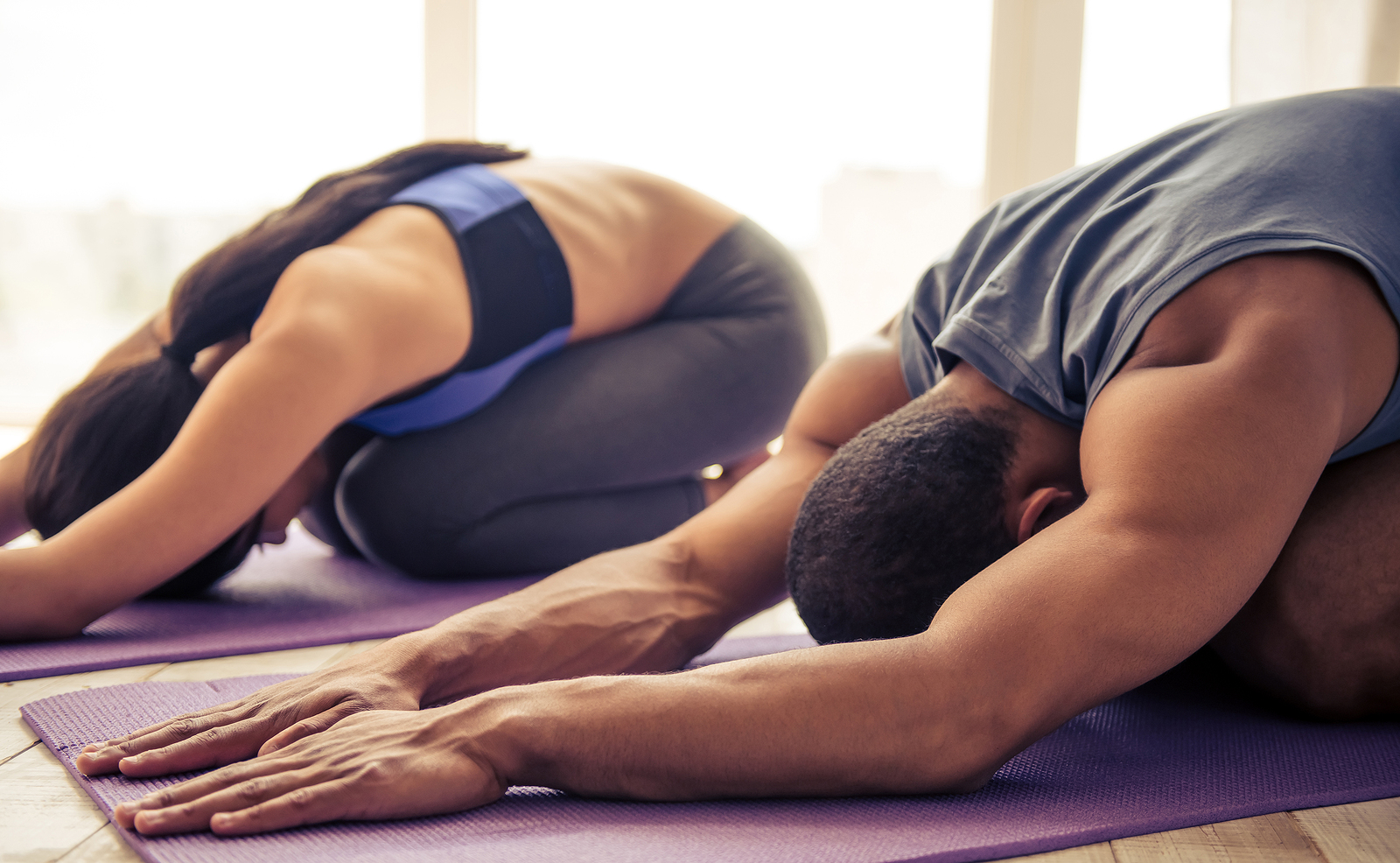
4. Child’s Pose
Gentle yet powerful, Child’s Pose stretches your hips, thighs, and lower back while calming the nervous system.
How to do the Child’s Pose stretch:
Start on all fours. Bring your big toes together and spread your knees wider than hip-width apart. Exhale and slowly move your hips back toward your heels, reaching your arms forward along the floor. Rest your forehead down (use a pillow if needed) and breathe deeply for 30 seconds to several minutes.
This stretch can be modified with blankets or cushions under the hips or head for comfort.
5. Seated Hamstring Stretch
Tight hamstrings are a common source of back and hip discomfort. Stretching them regularly can reduce strain on your spine and improve posture.
How to do this stretch:
Sit on the floor with one leg extended straight and the other bent with the sole of the foot against the inner thigh. Reach toward your toes on the extended leg, keeping your back straight. Hold for 20–30 seconds and switch legs.
The Physical therapists Perspective
As many physical therapists note, stretching is one of the most underrated forms of physical activity. Even people who exercise regularly often skip the stretching routine, missing out on its benefits for recovery, posture, and long-term joint health [1-5]. Try to do these stretches at least once a day—whether in the morning to energize your body or in the evening to unwind before bed.
If you have a medical condition, are recovering from surgery, or have a musculoskeletal disorder, consult with one of our physical therapists at STAR Physical Therapy today. Discontinue any stretch that causes pain and speak with a physical therapist for guided support to ensure you use safe stretching techniques.
References
- DG, Blazevich AJ, Kay AD, McHugh M. Acute effects of muscle stretching on physical performance, range of motion, and injury incidence in healthy active individuals: a systematic review. Appl Physiol Nutr Metab. 2016;41(1):1-11.
- Konrad A, Nakamura M, Sardoodian M, et al. The effects of chronic stretching training on musculoskeletal pain. Eur J Appl Physiol. 2025;125(8):2037-2048.
- Peixoto GH, Andrade AG, Menzel HJK, et al. Viscoelastic stress relaxation in the hamstrings b.efore and after a 10-week stretching program. Muscle Nerve. 2015 May;51(5):761-4.
- Parl CH, Beom J, Chung CK, et al. Long-term effects of lumbar flexion versus extension exercises for chronic axial low back pain: a randomized controlled trial. Scientific Reports. 2024;142714.
- Stove MP, Hansen LO, Elmbaek KK, et al. The effect of stretching intensity on pain sensitivity: A randomized crossover study on healthy adults. Eur J Pain. 2024;29(3):e4750.